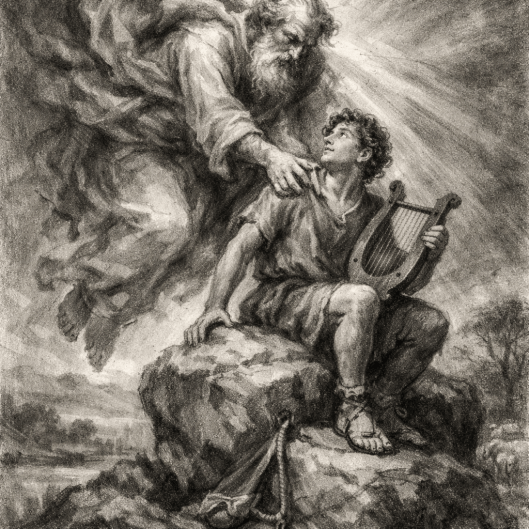
Psalm 40:1-3: I waited patiently for the Lord; he turned to me and heard my cry. He lifted me out of the slimy pit, out of the mud and mire; he set my feet on a rock and gave me a firm place to stand.
These verses celebrate God’s rescue: the psalmist waits, is heard, is lifted from danger, and is given a new song of praise, a movement from distress to secure praise that invites others to trust God. David uses vivid rescue imagery: waiting patiently signals steadfast trust; God inclining and hearing shows divine attentiveness; the slimy pit and mire picture helplessness and danger; being set on a rock means stability and safety. These images are commonly read as David’s testimony of deliverance and as a model of how God responds to faithful waiting.
Father God, I wait on You. Hear my cry; lift me from what traps me; set my feet on solid ground and give me a new song of praise, that others may see and trust You. Love You, thank You, praise You and give You all the honor and glory in Jesus Precious Name Amen.
 "Prayer to Care"